
The Critical Gap Between Appointment and Close
The period right after an appointment is set is the highest-risk stretch of the sales cycle. RAIN Group research found that 71% of buyers want to hear from sellers early, while they are still exploring ideas to improve business results — yet most cleaning operators wait passively for the scheduled meeting without nurturing the relationship in between. Commercial cleaning prospects in North Miami's hospitality sector, hotels along Collins Avenue, office complexes in Aventura, and medical facilities across Miami-Dade County typically evaluate several vendors at once. When your company goes silent after booking a meeting, competitors fill that vacuum with educational content, site visits, and relationship-building. Speed compounds the problem. The same urgency that applies to a first inquiry applies to every contact afterward: a prospect comparing several vendors rewards the company that stays present and responsive, and quietly drops the one that goes silent. Yet many operators schedule meetings days or weeks out with no interim contact at all, leaving that window wide open for a competitor. That gap creates three specific failures. First, prospects forget the specifics of why they agreed to meet. Second, their urgency fades as the immediate pain point gets patched over. Third, decision-makers become unavailable or shift priorities before the meeting arrives.Why Traditional Follow-Up Systems Fail Cleaning Companies
Most operators rely on a calendar reminder and a basic email confirmation. Those minimal touchpoints ignore the reality that facility-management decisions involve several stakeholders across operations, finance, and executive leadership. Generic CRM systems built for retail or software sales don't fit cleaning workflows. They can't track site-assessment requirements, square-footage calculations, scope-of-work variables, or the seasonal swings that affect hospitality and educational facilities across South Florida. Momentum also dies when operators fail to document objections, competitive pressure, and decision timelines during the first call. Without that intelligence, follow-up messages stay generic instead of addressing the specific concern that prompted the meeting. The Motion App CRM closes these gaps by capturing industry-specific data at every interaction. It tracks facility type, current vendor contract, renewal date, and special requirements unique to commercial spaces — from LEED certification needs to healthcare compliance standards relevant to North Miami medical offices. The principle is well established: structured, multi-touch follow-up sequences outperform ad-hoc manual outreach, because they ensure no step is skipped while a busy facility director is deciding. A system designed for cleaning workflows delivers the right information between booking and meeting without flooding the prospect's inbox.The Missing Bridge: Pre-Appointment Nurture Sequences
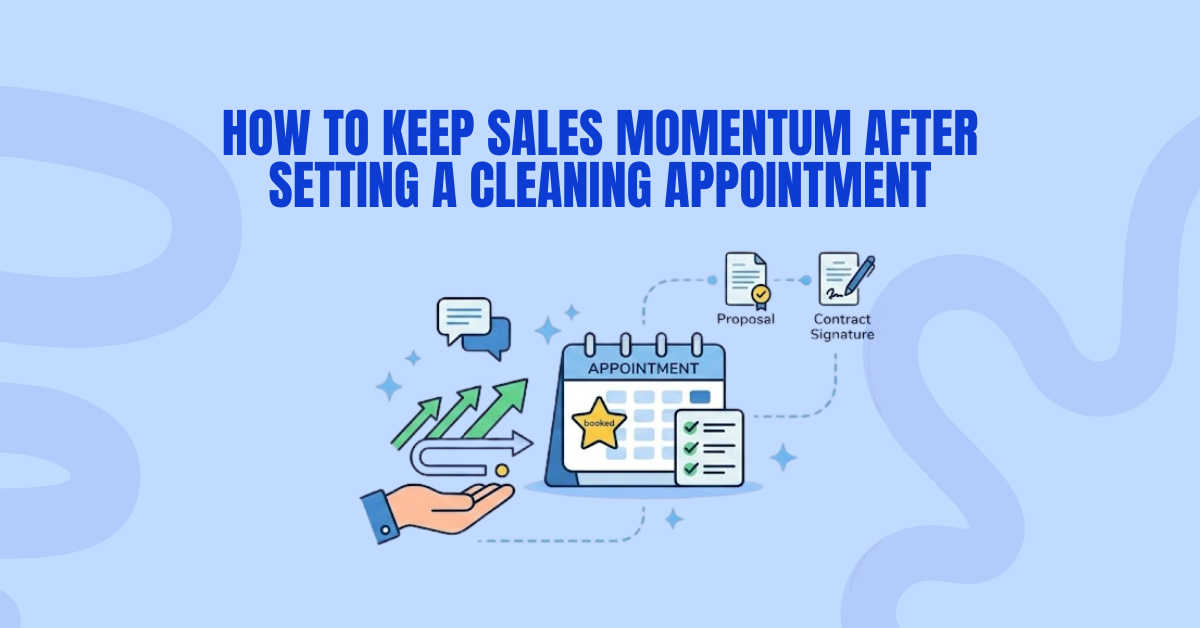
Strong operators run an automated but personalized sequence between confirmation and the meeting itself, usually three to five touchpoints across multiple channels. A typical sequence looks like this:| Timing | Touchpoint | Purpose |
| Within 2 hours of booking | Detailed confirmation: logistics, parking for your North Miami Beach office, and a clear agenda | Capture the prospect's peak interest while it is highest |
| 24–48 hours before | A relevant case study from a similar facility (a comparable shopping center for a retail-plaza prospect; infection-control and compliance documentation for a healthcare manager) | Build credibility and address their specific facility type |
| Morning of the meeting | Brief reminder confirming attendance, with an easy reschedule option | Reinforce the commitment and signal respect for their time |